
The short answer: Holiday catering menus for a winter party are built from a few hot dishes that hold well, such as a carved roast and chafing-dish sides, plus chilled appetizers on ice and a dessert course. The menu works when every dish can stay hot or cold for the length of your event and when guests can find out what is in each dish. Below is how we plan a winter spread in the Bay Area, from hot and cold holding to allergen questions.
Key Takeaways
- A winter spread usually has four parts: appetizers, a main course such as a carving station, sides that hold hot, and dessert.
- Hot food should stay at or above 140°F and cold food at or below 40°F, so every dish needs a plan for how it will be held.
- Perishable food should not be out for more than 2 hours, or 1 hour above 90°F, which makes your service timeline part of the menu.
- Tell your caterer about dietary needs and allergies early, and expect the cost of holiday catering packages to depend on headcount, service style, staffing, equipment, rentals and menu complexity.
What Goes on a Holiday Catering Menu for a Winter Party?
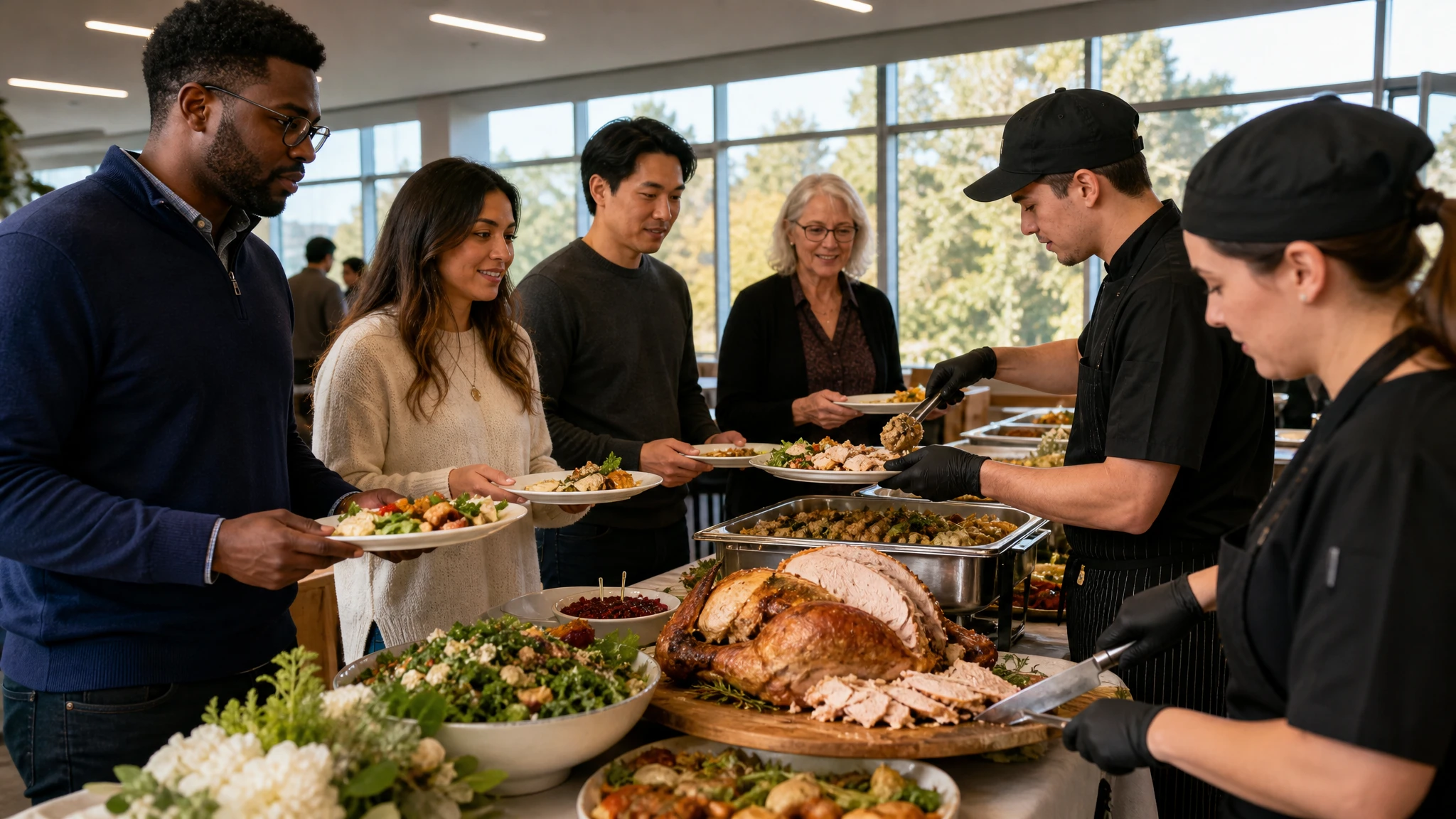
A winter party spread is usually organized in four parts: appetizers guests can enjoy while they arrive, a main course such as a carving station, sides and a vegetarian or vegan option that hold well in chafing dishes, and a dessert course. The exact dishes depend on your guest list, your venue and the kind of gathering you are hosting.
We have planned holiday catering menus across San Jose, San Francisco and the wider Bay Area since 1997. More than 80% of what we serve is prepared from scratch in our San Jose kitchen, so we think about the whole path a dish takes, from our stoves to your venue to the last guest in line. A winter menu is as much a logistics plan as a recipe list. The dishes that earn a place on it are the ones that stay good through the length of your event.
Here is how the parts of a spread usually fit together:
- Appetizers. Chilled items can sit in containers on ice, while warm bites work well in small batches that are replaced as they empty.
- Main course. A carving station gives you a centerpiece that guests can watch being served. A vegetarian or vegan main should share the table, not sit off in a corner.
- Sides. Hot sides belong in chafing dishes, where they can be held at the right temperature through service.
- Dessert. We do not bake or supply cake. If your own baker makes one, we handle the cutting and plating as part of our cake service.
- Drinks. We provide bartenders and a full bar setup. You supply the alcohol, and we serve it.
Roasts deserve a note. The USDA Food Safety and Inspection Service says raw meat and poultry should be cooked to the safe minimum internal temperature, and that the oven should be no lower than 325°F when you roast, as described on its Danger Zone page. A carved roast fits a winter spread because it is cooked in a controlled way and then held and carved at the event. You can browse the dishes we cook on our menu, and we adjust the selection to your event.
How Do You Keep Holiday Buffet Food Hot and Cold?
Keep hot food at or above 140°F and cold food at or below 40°F. The USDA says bacteria grow most rapidly between 40°F and 140°F and can double in number in as little as 20 minutes. Chafing dishes, preheated steam tables, warming trays and slow cookers hold hot food, and containers set on ice hold cold food, according to the USDA Danger Zone guidance.
This is why holding is a menu question, not just a kitchen question. For each dish on a holiday catering menu, we ask three things: how will it be held, on what equipment, and for how long? A braised or roasted dish that stays good in a chafing dish is a natural fit for a buffet. A delicate cold appetizer needs ice and small portions. A dish that needs to be served the moment it leaves the oven may be better as a station with someone attending it.
The USDA Keep Food Safe! guidance adds two practical points. Use a food thermometer to check both hot and cold holding temperatures, and keep cold food cold by nesting dishes in bowls of ice or by using small serving trays and replacing them often. Its page on safe handling of take-out foods makes a related point: swap in fresh refrigerated platters often, and do not top up a dish that is already on the table. It also says that just keeping food warm between 40°F and 140°F is not safe.
Winter does not change these numbers, and a crowded party room can be warm. If you are choosing a venue in San Jose or San Francisco, ask what space and power are available for holding equipment. Those answers shape how many hot dishes make sense and how many should be served cold or at a station.
How Long Can Food Sit Out at a Holiday Party?
Perishable food should not be out of refrigeration for more than 2 hours, or 1 hour if the temperature is above 90°F, according to the USDA’s Keep Food Safe! page. At a holiday party, that means your schedule matters as much as your recipes. The clock starts when food comes out, so plan service windows around when guests will actually eat.
Think of the limit as a planning factor. A seated dinner where everyone eats at once is a different problem from an open house where guests arrive in waves over several hours. For the second kind of event, it often makes sense to put out part of the menu at a time and bring out fresh trays as earlier ones empty. That keeps the table full without leaving any one dish out for the whole evening.
The USDA blog Don’t Let Bacteria Crash Your Party tells hosts to track how long food has sat on the buffet table and to discard anything left out longer than two hours. It says to reheat food to at least 165°F. It also says that chafing dishes and warming trays are fine for keeping hot food hot, but should not be used to reheat cold food. That last point matters for menu design. A dish that has to be reheated needs a real heat source and a plan, not a warming tray.
Leftovers follow the same clock. The USDA says leftovers should go into shallow containers so they cool quickly, and should be refrigerated at 40°F or below within two hours. It also notes that improper cooling of cooked food is one of the most common causes of foodborne illness. If you want food saved for the next day, decide that in advance, because the two-hour window affects what can be kept. We also plan quantities thoughtfully to reduce food waste, which means fewer leftovers to manage to begin with.
How Do Holiday Catering Menus Handle Allergens and Dietary Needs?
Tell your caterer about dietary needs and allergies when you plan the menu, not at the event. We accommodate halal, vegetarian, vegan and common allergy requests, and we plan the menu around what your guests need. Guests with serious allergies should still ask about ingredients before they eat.
The FDA explains in Have Food Allergies? Read the Label that nine foods are defined as major food allergens. Sesame became the ninth with the FASTER Act, signed in 2021. The FDA’s page on the FASTER Act and sesame says sesame has had to be labeled as an allergen on packaged foods and dietary supplements since January 1, 2023.
That is a packaged-food labeling rule, not a rule written for catering menus. Still, it is a useful reminder for a party. Allergens can sit in ingredients guests do not expect, so it is reasonable for anyone at your event to ask what is in a dish. A clear card beside each dish on the buffet helps guests make their own choices, and it saves your hosts from answering the same question all evening.
Send us your dietary notes early. A short list of how many guests need halal, vegetarian or vegan food, and any allergies you know about, is enough to start. A holiday menu should give those guests a full plate, not just a side dish. Because most of what we serve is made from scratch in our own kitchen, we can speak to what goes into the dishes we prepare.
What Affects the Cost of Holiday Catering Packages?
Headcount, service style, staffing, equipment, rentals and menu complexity drive the cost of holiday catering packages. The term is used differently from one company to the next, so the useful question is what is included, not what the package is called. We do not list figures here, because cost depends on your event, and a quote is built around its details.
Each factor works like this:
- Headcount. More guests mean more food, more serving pieces and more time at the table.
- Service style. How the food reaches your guests, whether from a buffet, stations or another format, changes how many people it takes to serve it.
- Staffing. A carving station or a bar needs someone attending it. Our bartenders and full bar setup are part of this conversation, and you supply the alcohol.
- Equipment. Chafing dishes, ice and the means to check temperatures all support hot and cold holding.
- Rentals. Tables, linens, plates and glassware depend on what your venue already has.
- Menu complexity. More dishes, more separate components and more dishes that need active attention take more planning and labor.
When you compare holiday catering packages, ask each caterer to describe what is covered, what is extra and what you would need to arrange yourself. If you are planning holiday celebration catering for an office, our corporate event catering page covers how we work with workplaces. For a family or friends gathering, see our private event catering page.
Planning Your Event
If you are planning a winter party in San Jose, San Francisco or elsewhere in the Bay Area, you can request a quote and tell us about your guests, your venue and your timing, or look through the menu first to see what we cook.
Frequently Asked Questions
Can a holiday catering menu include vegan, vegetarian and halal dishes?
Yes. We accommodate halal, vegetarian, vegan and common allergy needs. Share your guest notes when you plan the menu, so those dishes can be built into the spread as full options and not added at the last minute.
How long can a holiday buffet sit out?
The USDA says perishable food should not be out of refrigeration for more than 2 hours, or 1 hour if the temperature is above 90°F. Hot food should be held at or above 140°F and cold food at or below 40°F. We plan service windows and fresh trays around those limits.
Do holiday catering packages include cake or alcohol?
Not from us. We do not bake or supply cake, but we provide cake service, meaning cutting and plating, for the cake from your own baker. We provide bartenders and a full bar setup, but we do not sell or supply alcohol. You supply it, and we serve it.