
The short answer: The most useful corporate lunch menu ideas for a Bay Area office start with the format, then the flavors, then the dietary needs of your team. Choose a service style that fits your meeting, build the menu around a few mains with clear vegetarian and vegan options, and plan how every dish will stay at the right temperature. The sections below walk through each step.
Key Takeaways
- Pick the format first: boxed lunches, buffets, build-your-own stations or shared platters each suit a different kind of day.
- Collect dietary needs with the RSVP and label every dish, including the nine major food allergens.
- Hot food belongs at 140°F or above and cold food at 40°F or below, and nothing should sit out for more than 2 hours.
- Cost depends on menu complexity, protein, service style, headcount, dietary accommodations and delivery logistics.
What are some good corporate lunch menu ideas for a Bay Area office?
Good corporate lunch menu ideas usually fall into four formats: individually boxed lunches, buffets, build-your-own bowl or taco stations, and shared platters. Each works for a different kind of day. Boxed lunches suit tight meetings, buffets suit larger groups with mixed tastes, and stations suit teams that like choice. Pick the format first, then the food.
Here is how the four formats tend to play out in an office:
- Boxed lunches. Each person gets a sandwich or wrap, a side and a small extra. They are easy to hand out in a conference room, and each box can be labeled for a specific dietary need.
- Buffets. A hot main, a cold salad, a vegetable side and a starch give people room to choose. They need a little more table space and a plan for keeping food hot and cold.
- Build-your-own stations. Grain bowls, tacos or salad bars let people assemble what they like. They work well when a team has many different preferences, because the toppings do the sorting.
- Shared platters. Platters of wraps, roasted vegetables, salads and fruit suit casual working lunches where people graze between conversations.
Many Bay Area offices bring together people with different food traditions and habits, so a menu with range tends to serve a team better than one dish for everyone. In San Jose and San Francisco, hybrid schedules also mean headcount can shift from week to week, so a confirmed count matters. If your lunch is part of a larger gathering, our corporate event catering page explains how we approach offices, meetings and company events, and the menu shows the kind of food we cook.
One thing helps with any format. We prepare more than 80% of what we serve from scratch in our San Jose kitchen, so a menu built from a handful of well-made dishes is usually more practical than a long list of items. A short menu with a clear vegetarian main, a clear vegan option and a protein for everyone else covers most rooms.
How do you plan business lunch ideas around dietary needs?
Ask about dietary needs before you choose the menu, not after. Collect requests such as halal, vegetarian, vegan and allergies with the RSVP, then build one or two mains that already work for most people. Label every dish on a menu card so guests can decide for themselves. We accommodate halal, vegetarian, vegan and common allergies, and we plan around the list you give us.
Allergens deserve their own line in your planning. The FDA lists the nine major food allergens as milk, egg, fish, crustacean shellfish, tree nuts, wheat, peanuts, soybeans and sesame, and its food allergen labeling guidance also widens milk and egg to include milk from ruminants other than cows and eggs from birds other than chickens. Sesame became the ninth major allergen under federal law on January 1, 2023, as noted in the FDA’s December 2024 addition to the 2022 Food Code. That Food Code document also says employee food safety training must include awareness of the nine major allergens.
Sesame is the one that surprises people at office lunches. It can turn up in hummus, tahini, dressings and sauces, so it is worth a line on the menu card. A few labeling ideas that work well:
- Mark each dish as vegetarian, vegan or contains meat or fish.
- Note wheat for anything with bread, pasta, tortillas or a wheat-based sauce, so guests avoiding gluten can see it quickly.
- Call out dishes that contain tree nuts or peanuts, and dishes prepared without nuts as an ingredient.
- Flag sesame in hummus, tahini, dressings and toppings.
- Keep sauces and dressings on the side when you can, so people control what lands on their plate.
Be direct with your caterer about how serious an allergy is. A menu card tells guests what is in a dish, but it cannot remove every chance of cross-contact in a shared kitchen or on a shared buffet line. If someone on your team has a severe allergy, tell us early so we can plan the preparation and serving around that person.
Labeling is also becoming an expectation in California. Governor Newsom signed SB 68, the Allergen Disclosure for Dining Experiences Act, on October 13, 2025, according to the FDA Law Blog. It requires menu disclosure of the nine major allergens, applies to food facilities covered by the federal menu-labeling rules, meaning chains with 20 or more locations, and makes California the first state with such a requirement. The Allergen Bureau reports a July 1, 2026 start and notes that the rule covers ingredients intentionally in the food, not cross-contact risk. Whether the law reaches a particular business is a question for that business, but the practice is a sensible standard for any office menu card.
How do you keep catered office lunches at the right temperature?
Keep hot food at 140°F or above and cold food at 40°F or below, and do not leave food out of refrigeration for more than 2 hours, or 1 hour when the temperature is above 90°F. The USDA notes that bacteria grow fastest between 40°F and 140°F. Those limits shape which dishes suit a long meeting and how you set up the table.
The USDA Food Safety and Inspection Service explains this range on its danger zone page, including that bacteria can double in as little as 20 minutes. It recommends holding hot food with chafing dishes, preheated steam tables, warming trays or slow cookers, and keeping cold food in containers set on ice. FoodSafety.gov gives the same range, suggests the same hot-holding tools and advises refrigerating perishables within 2 hours.
Menu choice matters here. The CDC’s guidance on preventing C. perfringens food poisoning says to keep cooked food at 40°F or colder or at 140°F or hotter, including during transportation, and to refrigerate leftovers at 40°F or colder within 2 hours. Stews, rice, beans and braised meats are classic office lunch dishes, and they are the kind of make-ahead hot foods that need attention when they are held warm for a long time. That does not mean skipping them. It means planning the serving window and the holding equipment around them.
If your lunch is on a patio or in a courtyard, the FDA’s advice on handling food while eating outdoors repeats the 2-hour rule and the 1-hour rule above 90°F. Bay Area weather can change quickly between a foggy San Francisco morning and a warm afternoon in San Jose, so an outdoor setup should account for sun and shade.
A few practical habits help on your end:
- Tell us how long the lunch will actually run, not just when it starts.
- Keep trays covered and out of direct sun until people are ready to eat.
- Choose one person to check the table and put away leftovers promptly.
- Do not top off a half-empty tray with fresh food left out for hours. Ask for a fresh tray instead.
One note on numbers. Licensed food businesses follow the FDA Food Code, which sets its own limits for commercial kitchens and can differ slightly from the consumer figures above. The 40°F and 140°F figures are the ones public health agencies give for general guidance, and they are a clear target for any office lunch table.
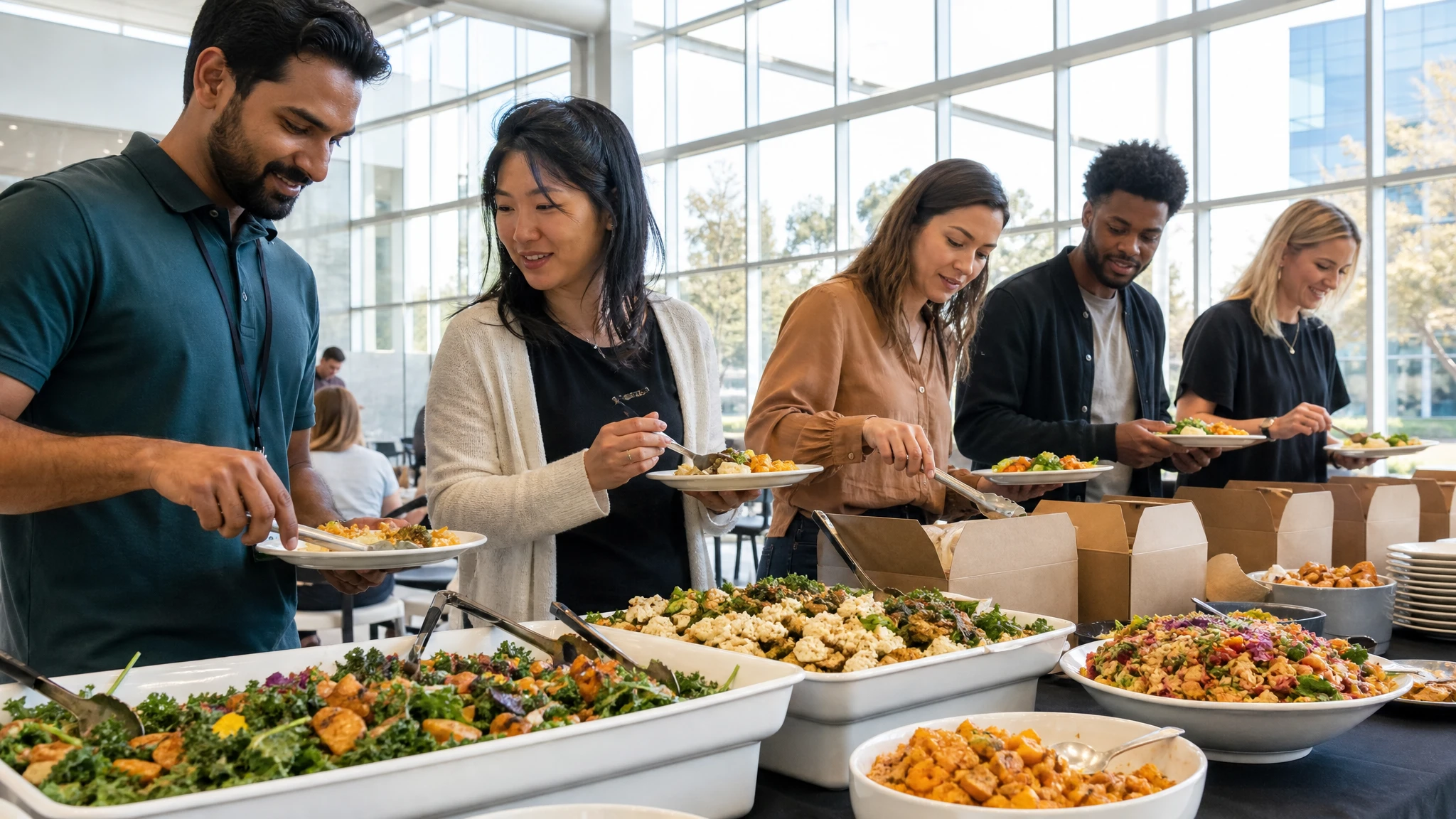
Corporate lunch menu ideas by type of meeting
The right menu depends on what your team is doing while they eat. A client lunch needs different food than a training day, and a quick standing meeting needs different food than an all-hands. These ideas are starting points that we can shape around your group, your kitchen access and your schedule.
- Working lunch. Choose food people can eat with one hand. Wraps, sandwiches on good bread, grain salads and fruit travel well and do not demand much cutlery. Boxed lunches keep each person’s meal separate and easy to label.
- Client lunch. Think composed salads, roasted seasonal vegetables, a main that looks tidy on a plate and a dessert people can share. Staffed service can make the room feel more polished, and it frees your team to focus on the guests.
- Training day or workshop. People need to eat and return to their seats. A build-your-own bowl or taco station moves quickly when you set it up as two lines, and the toppings let people choose lighter or heartier plates.
- All-hands or team celebration. A buffet with a hot main, a vegetarian main, salads and sides suits a larger crowd. If the day includes a birthday or milestone, you bring the cake from your own baker, and we handle the cutting and plating. We do not bake or supply cakes.
- Late-day gathering. For an end-of-quarter get-together, we can provide bartenders and a full bar setup. You supply the alcohol and we serve it. We do not sell or supply alcohol.
Flavor direction is another way to plan. Mediterranean spreads, Mexican-inspired stations, Asian-inspired bowls and classic deli platters all adapt well to vegetarian, vegan and halal requests, because many of their components are easy to separate. You can see the range of what we cook on the menu, and if you are comparing ideas for a larger company event, the events overview shows the other kinds of gatherings we cater.
For repeat lunches, rotation helps. A team that eats catered lunch every week tires of the same sandwich platter. Changing the flavor direction and the format from week to week, while keeping the dietary labeling consistent, keeps people interested and keeps the planning simple.
What affects the cost of a catered office lunch?
Cost depends on menu complexity, protein choice, service style, headcount, dietary accommodations and delivery logistics. We do not print figures in articles, because the right number depends on those details. Tell us your date, headcount, location and dietary needs, and we can shape a menu to fit what you have in mind.
Here is how each factor tends to work. A menu with several cooked-from-scratch dishes takes more preparation than a simple platter, and the protein you choose changes both the ingredients and the cooking. A staffed lunch with servers differs from a drop-off setup where your team serves itself. A larger headcount means more food and more equipment, and special diets can mean separate preparation or separate trays. Delivery across the Bay Area, whether to an office park in San Jose or a high-rise in San Francisco, depends on distance, access and timing.
A realistic headcount is one of the simplest ways to keep a lunch sensible. We plan thoughtfully to reduce food waste, and a confirmed count lets us prepare what your team will eat rather than guessing. If attendance is uncertain, say so, and we can talk through how to plan around it.
Planning Your Event
If you are planning a lunch for an office in San Jose, San Francisco or elsewhere in the Bay Area, browse the menu for ideas, then request a quote with your date, headcount and dietary needs, and we will take it from there.
Frequently Asked Questions
What should I tell a caterer before choosing an office lunch menu?
Share the date, start time and how long people will be eating, plus your headcount, the delivery address and whether you need setup or service. Include dietary needs such as halal, vegetarian, vegan and allergies, and say how serious any allergy is. That detail lets us plan the menu, the labeling and the holding temperatures.
Can one office lunch cover halal, vegetarian and vegan guests?
Yes. We accommodate halal, vegetarian, vegan and common allergies, and a menu can be built so each group has a main that was planned for them. Labeling every dish on a menu card helps guests see what is in each item. For severe allergies, tell us early so we can plan the preparation and serving.
How long can catered food sit out at an office lunch?
Food should not sit out of refrigeration for more than 2 hours, or 1 hour when the temperature is above 90°F. Public health guidance says to keep hot food at 140°F or above and cold food at 40°F or below. Tell your caterer how long the lunch will run so the serving setup can match it.