
The short answer: Good sustainable packaging office lunch delivery comes down to three things: packaging that is recyclable or compostable, packaging that uses less material, and a supplier who can document what the products are made of. California’s packaging law, SB 54, is pushing the market toward recyclable or compostable packaging by 2032, so these are reasonable questions to ask your caterer today.
Key Takeaways
- Look for packaging that is recyclable or compostable, and ask for documentation instead of relying on a label alone.
- Using less packaging matters as much as the material. Right-sized containers and fewer extra components fit the direction of California law.
- SB 54 places its obligations on packaging producers, not on offices or caterers, but it shows where the packaging market is going.
- Cost depends on material type, how much packaging each order uses, and supplier compliance, so plan the order as a whole.
What Is Sustainable Packaging for Office Lunch Delivery?
Sustainable packaging for office lunch delivery is packaging that can be recycled or composted after the meal, uses no more material than the food needs, and comes from a supplier that can document what the product is made of. It is a combination of material, quantity and follow-through, not a single label or a single container type.
Each of those parts matters on its own. Material is the part people notice first. A container that can be recycled or composted is easier to feel good about than one headed for the trash. Quantity is quieter but just as important. A lunch that arrives with a box inside a bag inside a carrier, plus extra utensils and condiment cups nobody opens, creates waste even if every piece is made from a better material. Follow-through is the part most offices overlook. Lunches are often eaten at desks, in conference rooms or in shared kitchens, and packaging only does its job if it ends up in the right bin afterward. What happens next depends on your building’s collection setup, which can differ from one office in San Jose or San Francisco to the next. Check with your office manager or building contact about what your bins and hauler actually accept. At Caterman we also plan thoughtfully to reduce food waste, because food and packaging are two sides of the same question: sending the right amount of the right food, in the right container.
Why Does California’s SB 54 Matter for Office Lunch Packaging?
SB 54 matters because it shows where packaging is heading. The law sets up a statewide extended producer responsibility program for single-use packaging and single-use plastic food service ware, with a target that all of it be recyclable or compostable by 2032. The obligations fall on producers, not offices, but the market your caterer buys from is changing as a result.
Here is what the sources say. CalRecycle announced on May 1, 2026 that California’s Office of Administrative Law had approved the permanent SB 54 regulations, and they took effect upon filing, according to Recycling Today’s report on the approved regulations. By 2032, the law requires that 100 percent of single-use packaging and single-use plastic food service ware sold in the state be recyclable or compostable. It also sets a 65 percent recycling target and a 25 percent reduction in single-use packaging and food service ware. Mayer Brown’s summary of the SB 54 regulations words the 65 percent target as applying to single-use plastic packaging. All of this describes a direction of travel. It is not a rule that applies to a caterer’s lunch box today. Still, it helps explain why recyclable or compostable options are becoming easier to find, and why cutting the amount of packaging, not only swapping materials, is part of the picture. These sources are trade press and law-firm summaries, so for the exact wording of the rules, CalRecycle’s own pages are the place to confirm.
What Should You Ask a Caterer About Packaging?
Ask what each container, lid, bag and utensil is made of, whether it is meant to be recycled or composted, and what documentation the supplier can provide. Then ask how many separate pieces come with a typical order and whether you can reduce them. Finally, ask whether the packaging supplier is registered and compliant under California’s new producer rules.
That last question needs some context. SB 54’s obligations fall on producers, meaning the companies that make or sell packaging, and CalRecycle estimates the law will apply to more than 5,700 of them, according to Ropes & Gray’s California EPR update. The producer registration deadline was June 1, 2026, as reported by Packaging Dive’s coverage of the SB 54 rules. The same Mayer Brown summary notes that CalRecycle has broad authority to impose administrative civil penalties on non-compliant producers. The sources we reviewed do not name caterers, so your caterer is most likely a customer of these producers, not one itself. That makes the caterer a sensible person for you to ask, and the packaging supplier a sensible person for the caterer to ask in turn. If a label says recyclable or compostable, ask for the paperwork behind it. We have not covered how specific materials qualify under California rules here, so rely on the supplier’s documentation and CalRecycle’s own guidance to confirm that point for any product you are considering.
How Can You Use Less Packaging Without Hurting the Meal?
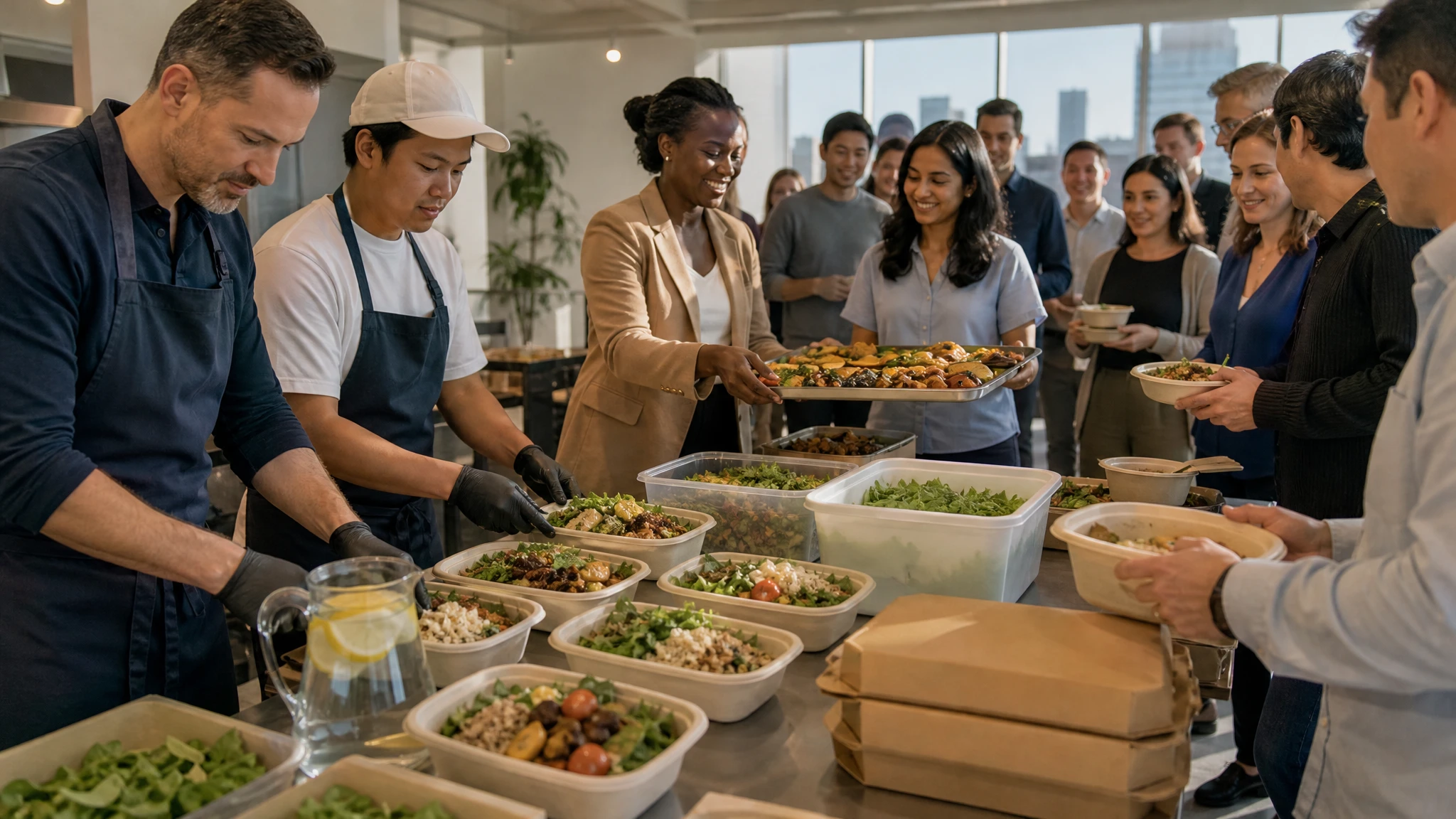
Start by right-sizing. Choose containers that fit the food, skip components nobody will use, and consider shared platters for team lunches where individual boxes are not needed. Utensils, napkins and condiments can be included on request instead of by default. Fewer pieces means less to collect and sort, and it fits the 25 percent reduction goal in SB 54.
Individual boxes still have a place. When a team includes people who eat halal, vegetarian or vegan, or who have common food allergies, individually packaged and labeled meals can help each person get the right food. We accommodate those needs, and in those cases the better question is not whether to use individual packaging but how to make it right-sized and made from a material you can recycle or compost. For a standing weekly lunch, a shared format with a few well-labeled platters often needs far fewer containers than a box for every person. Because more than 80% of what we serve is prepared from scratch in our San Jose kitchen, we portion and plan each order ourselves, which gives us room to talk through the format with you before the food is made. If your office has recurring or larger lunches in mind, our approach to corporate catering is a good starting point for how those orders are usually organized.
What Drives the Cost of Sustainable Packaging?
Three things drive cost: the type of material, how much packaging each order uses, and whether the supplier is meeting the new producer rules. Order format matters too, since individually boxed lunches need more pieces than shared platters. We do not quote figures in articles, but these factors are worth discussing whenever you compare options.
Material comes first. Different materials cost suppliers different amounts to make and certify, and that carries through to the order. Quantity comes next, and it is the factor you have the most control over. Every extra lid, sleeve, bag and cup adds to the total, so trimming components can matter as much as choosing a different material. Supplier compliance is the newer factor. As packaging producers register and meet their obligations under SB 54, those responsibilities are part of what suppliers manage behind the scenes, and that can shape what they offer and how they offer it. The practical advice is to compare options on the same basis. Ask for the same lunch in two formats, shared and individual, and see how the packaging differs. Offices in San Jose, San Francisco and across the Bay Area also have different building rules, delivery logistics and bin setups. Local foodware and organics requirements can vary by city and county, and we have not summarized them here, so check with your building and your local hauler before you decide what to ask for.
Planning Your Event
If you are planning office lunches in San Jose, San Francisco or elsewhere in the Bay Area, tell us about your packaging priorities when you request a quote, and look through the menu to see what we prepare.
Frequently Asked Questions
Does SB 54 require my office or caterer to use compostable packaging today?
Not directly, based on the sources we reviewed. SB 54 places its obligations on producers, the companies that make or sell packaging, and sets a 2032 target for single-use packaging to be recyclable or compostable. The sources do not name caterers. For exact requirements, confirm with CalRecycle.
How can I tell whether packaging is really sustainable?
Ask for documentation instead of relying on a label alone. Find out what the packaging is made of, whether it is meant to be recycled or composted, and whether your building’s bins and hauler accept it. Also look at quantity. Fewer, right-sized pieces are part of the picture.
Can I ask for less packaging on a catered office lunch?
Yes, and it is worth raising when you request a quote. Options include shared platters instead of individual boxes, utensils and condiments on request, and skipping extras nobody will use. If your team has dietary needs, some individual packaging may still make sense so each person gets the right meal.