
The short answer: a wedding kids menu is a separate, simpler set of dishes for your youngest guests, and it works best when you plan it by age group. Toddlers need small, soft, easy-to-chew food. School-age children usually do well with familiar dishes in smaller portions. Teenagers can generally eat from the main menu. Whatever you choose, cut and prepare the food with choking risk in mind, collect allergy information from parents on the RSVP, and seat children where an adult can see them.
Key Takeaways
- Plan your wedding kids menu in age tiers: toddlers, school-age children and teenagers have different needs.
- The American Academy of Pediatrics advises keeping high-risk foods from children until age 4 or older, depending on each child’s development and maturity.
- Round, firm foods such as grapes and hot dogs should be completely chopped into tiny pieces for young children, or left off the menu.
- Chips, pretzels and popcorn are common "kid-friendly" extras that appear on the caution list for young children.
- Ask parents about dietary needs and allergies on the RSVP, then pass that information to your caterer in good time.
- Seated service at a children’s table suits the advice to have children sit up while they eat, provided an adult is nearby.
- Keep an eye on shared snack tables, candy displays and balloons, as these can be risks for younger children.
Do You Need a Separate Wedding Kids Menu?
Not every wedding needs one. If only one or two children are attending, you might simply adapt a main course for them. If you have a dozen or more, a dedicated children’s menu usually makes the meal run more smoothly for everyone.
The reason is practical. A multi-course adult dinner can take a long time, and children who are tired, excited and out of their routine often find it hard to sit through. A shorter, simpler meal that arrives promptly can keep the evening calmer for parents and for you.
There is also a food-safety reason. Adult dishes may be too large, too rich, too spicy or too hard to chew for a small child. A menu designed for children lets you control how food is cut, how it is served and what is left out.
This article focuses on the planning decisions you control: the age groups you cater for, the foods you choose, how they are prepared, and how the children’s meal fits into the rest of the reception.
Start by Counting Children by Age
Before you think about dishes, find out who is coming. A single "children" category is too broad. A one-year-old and a twelve-year-old have almost nothing in common at the table.
Ask for each child’s age on the RSVP, or ask parents to tell you which age band their child falls into. Then divide the children into three working groups:
- Toddlers and preschoolers: small, soft foods and careful preparation.
- School-age children: familiar dishes in smaller portions.
- Teenagers: usually the regular menu, perhaps with a lighter portion if parents prefer.
These groups are a planning tool, not a rule. Children develop at different rates, and a parent will know best what their child can manage. Give parents a way to say so on the RSVP.
Toddlers and Preschoolers
This is the group that needs the most thought. Very young guests are still learning to chew and swallow. The American Academy of Pediatrics explains that children who do not chew well may try to swallow food whole, which is part of why preparation matters so much.
The same guidance on choking prevention for babies and children advises keeping high-risk foods from children until age 4 or older, depending on each child’s development and maturity. For your menu, that means the youngest children should be offered food that is soft, small and easy to manage, and anything round or firm should be handled with care.
Good planning questions for this age group include:
- Can the food be cut into small pieces, or mashed, before it reaches the table?
- Is it soft enough to eat without much chewing?
- Can the child eat it while sitting upright at a table?
- Do the parents want to bring their own food for a baby or a child on a special diet?
Many parents of very young children will bring their own food for them, and that is fine. Let parents know they are welcome to do so, and tell your caterer in advance so that nobody is surprised on the day.
School-Age Children
Children of school age can usually manage a wider range of food. For this group the aim is a meal that is easy to recognise and easy to eat. Familiar dishes tend to work better than unusual ones, because a wedding is already an unfamiliar setting with plenty to look at.
You can keep it simple: a main course, a side or two, some vegetables or fruit, and a small dessert or a slice of wedding cake. Smaller portions reduce waste and keep the children from being overwhelmed by a full adult plate.
Even at this age, some foods still deserve care. The AAP page notes that balloons pose a choking risk to children up to 8 years old, which matters if you are using balloons in the decor or as table activities.
Teenagers
Most teenagers can eat the regular menu. Treating them as adults at the table is often what they prefer. You may want to check with parents whether any teenager has a dietary requirement, and make sure they are seated in a place that suits them, perhaps with other young people rather than at the children’s table.
If you want to offer a lighter option for teenagers who are not keen on the main dish, a simple alternative from the same kitchen is usually easier than a separate menu.
Preparing Food Safely for Young Guests
Choking is the most important safety issue to think about when you plan food for small children, and it is one you can address in the menu itself.
The CDC’s guidance on choking hazards for infants and toddlers says that the way food is prepared can raise the risk. Foods that are served uncooked, whole, or in certain shapes or sizes can be hazards. It also says that cutting food into smaller pieces and mashing foods can help prevent choking.
This gives you a clear checklist to discuss with your caterer:
- Which dishes on the children’s menu are served whole, and can they be cut or mashed instead?
- Are any foods small, sticky or hard to chew and swallow?
- Are raw items on the plate, and are they suitable for the youngest children?
- How will the food be cut, and will that happen in the kitchen rather than at the table?
The CDC also advises avoiding small, sticky or hard foods that are difficult to chew and swallow. That does not mean children cannot have a treat. It means the treat should be chosen and prepared with the youngest guests in mind.
Round, Firm Foods
The AAP names hot dogs and grapes as examples of round, firm foods. It says they can be served if they are completely chopped into tiny pieces. This is useful for a wedding menu, because both are familiar foods that often appear on children’s plates and fruit platters.
For the youngest guests, you have two sensible options. Either ask the kitchen to cut such items small before serving, or leave them off the children’s menu altogether. The second option is the simplest, and there are plenty of other choices.
Remember that a fruit platter on a buffet is not prepared for toddlers. If whole grapes are on a shared table, a small child could reach them. If you want fruit available to the youngest guests, ask for it to be cut small on a separate plate.
Snack Foods to Treat With Caution
The CDC lists potato or corn chips, pretzels, popcorn and similar snack foods as potential choking hazards for young children. It notes that the list comes from the USDA WIC programme and may not include all foods that could cause choking.
These are exactly the foods that often turn up as easy extras on a children’s table or in a welcome bag. If you have toddlers and preschoolers attending, think twice about putting them within reach. For older children they may be fine, but a mixed table needs a little thought.
You can still offer snacks. Softer options that are easy to chew, or snacks cut and served by staff, are a safer choice for the youngest group. Ask your caterer what they would suggest.
Choosing Dishes for a Wedding Kids Menu
This is an area where your own judgement matters. Rather than listing a fixed menu, here are some principles to guide your choices.
- Keep it familiar. A plain, recognisable dish is easier for children to eat at an event full of new sights and sounds.
- Keep it simple to cut. Choose food that can be cut into small pieces in the kitchen and arrive at the table ready to eat.
- Include something fresh. A vegetable or fruit option, prepared appropriately for the age group, balances the plate.
- Keep portions modest. Smaller servings suit smaller appetites and reduce what goes to waste.
- Match the main menu where it makes sense. A milder, smaller version of an adult dish can work well for school-age children, as long as it is not too spicy or hard to chew.
Caterman prepares more than 80% of what it serves from scratch in its San Jose kitchen, and that kind of kitchen control can be useful when you want food cut, softened or simplified for children. When you speak to any caterer, ask how they prepare food for young guests and what they can adjust.
Seating, Service and Supervision
How the meal is served matters as much as what is on the plate.
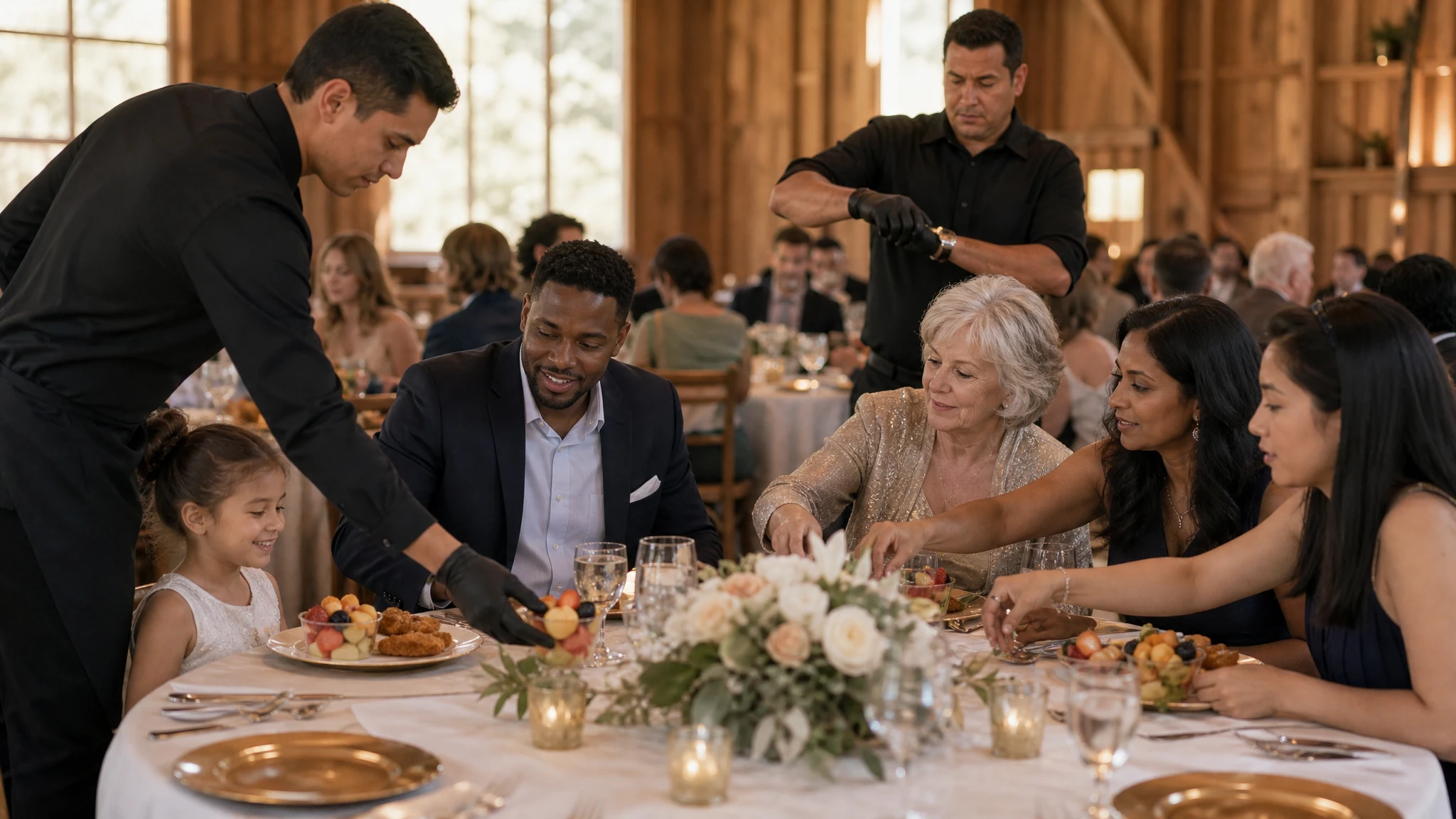
The CDC advises having children sit up while they eat, and not eating while lying down, crawling or walking. At a wedding, that guidance is easy to forget. Children get excited, run between tables, and carry food with them. Seated service at a children’s table suits the advice, because it encourages children to stay put while they eat.
Where to Seat the Children
You have a few options, and none is right for every wedding:
- A children’s table: useful when several children of similar ages are attending. It lets them eat together and lets you serve their food as a group.
- Children with their parents: better for toddlers and babies, who need a parent close at hand.
- A mixed approach: older children and teenagers at a table of their own, with younger ones beside their families.
If you use a children’s table, place it where adults can see it easily, and where it is close to the kitchen service route so food can arrive quickly.
Who Is Watching?
A children’s table should never be unsupervised. Decide in advance who will keep an eye on it. That might be a relative, a family friend or a babysitter. Make sure the person knows which children have allergies or dietary needs, and that they know where the parents are sitting.
The AAP notes that many choking incidents happen when older siblings give a younger child dangerous foods, toys or small objects. A mixed-age children’s table can therefore carry a hidden risk. Consider putting a short note on the table or the menu card asking older children not to share their food with younger ones, and keeping the youngest children close to their parents.
Collecting Dietary Needs and Allergy Information
The most reliable way to get this right is to ask. Add a short question to your RSVP asking parents to list any dietary needs or allergies for each child, along with the child’s age.
You can keep the wording simple. For example, ask for the child’s name, age and any foods they cannot eat, whether for allergy, religious or family reasons. Then pass the information to your caterer well before the event.
Caterman accommodates dietary needs including halal, vegetarian, vegan and common allergies. That applies to children as well as adults, so it is worth including children in your dietary list rather than assuming they will eat the standard plate.
A note on allergies: this article does not set out specific allergen rules, because they should be confirmed against current official guidance. Talk through any allergy in detail with your caterer, and with the child’s parents, so that the kitchen knows exactly what to avoid and how to handle it.
Timing the Children’s Meal
Children generally do better when they eat promptly. Waiting a long time at a table while the adults are served can lead to restlessness and unhappy faces.
One common approach is to serve the children’s meal first, or at the same time as the adults’ first course. This lets children finish eating earlier and then enjoy the rest of the reception. It also means parents are free to relax during their own meal.
Another point to discuss with your caterer is how long food will sit before it is served. This is a kitchen question, and a good catering team will have a plan. Ask them how children’s meals are timed and plated, rather than assuming they will follow the adult service.
The Rest of the Reception: Snacks, Cake, Balloons and the Bar
A children’s menu does not stop at the main course. Think about everything else that is within a child’s reach.
Snack and Candy Tables
Shared snack tables and candy displays are popular, but they can be unsupervised and open to every age. Since the CDC lists popcorn, chips, pretzels and similar foods as potential hazards for young children, and the AAP notes that older siblings sometimes give younger children unsuitable food, it is worth keeping an eye on these areas.
You might place snack tables away from the youngest guests, or have a staff member or helper nearby. You could also ask parents in the wedding programme or on a small sign to help supervise.
Balloons and Decor
If you are using balloons in the decor or as part of children’s activities, remember that the AAP says they pose a choking risk to children up to 8 years old. You may prefer other decor or activities where younger children are present, or keep balloons well out of reach.
Wedding Cake
Children often look forward to cake. Caterman does not bake or supply the cake. We provide cake service, which means cutting and plating the cake from your own baker. If you would like smaller slices for children, mention it when you arrange service, and consider the same cautions about size and texture for the youngest guests.
The Bar
If you are having a bar, remember that children will be present. Caterman provides bartenders and a full bar setup, but does not sell or supply alcohol. You supply it and we serve it. Non-alcoholic drinks for children can be set out alongside, so that they have something suitable and are not tempted to reach for adult drinks. Discuss with your caterer where drinks will be placed and who will serve them.
Reducing Food Waste With Children’s Meals
Children often eat less than adults, and an unfinished plate is common. Plan smaller portions, and let your caterer know the number and ages of children so that quantities can be estimated sensibly.
Caterman plans thoughtfully to reduce food waste. Accurate numbers help, which is another reason to collect ages and dietary needs on the RSVP. If a few children decide not to attend, tell your caterer as early as you can so that the numbers can be adjusted.
Questions to Ask Your Caterer
When you discuss the children’s meal, a short list of questions keeps the conversation focused:
- How do you prepare and cut food for toddlers and preschoolers?
- Can you leave high-risk foods off the children’s menu, or cut them small?
- How do you handle dietary needs and allergies, and how is that information passed to the people serving?
- Can children’s meals be served first or at the same time as the adults’ first course?
- How will the children’s table be served, and where should it be placed?
- Can portions be smaller for children, and how does that affect planning?
- If parents bring food for a baby or a toddler, is there somewhere to heat or store it?
You can add questions of your own. The aim is to leave no gaps between what you and the parents expect and what the kitchen and serving team will do.
A Simple Planning Order
If you are not sure where to begin, work through the decisions in this order:
- Decide whether children will have their own menu, based on how many are attending.
- Add age and dietary questions to the RSVP.
- Group children by age and decide how each group will be served.
- Choose dishes with preparation and choking risk in mind.
- Decide where children will sit and who will keep an eye on them.
- Check snack tables, decor and balloons for anything that could be a hazard.
- Share the final numbers, ages and dietary needs with your caterer.
Frequently Asked Questions
Should every child get a separate kids menu?
Not necessarily. Teenagers can usually eat the regular menu, and very young children may eat food their parents bring. A separate menu is most useful for school-age children and for those toddlers whose parents want you to provide food.
Which foods should I avoid for the youngest guests?
The AAP and CDC both point to round, firm foods such as grapes and hot dogs, and to snacks such as chips, pretzels and popcorn. Cut round foods into tiny pieces, or leave them off the menu for the youngest children.
How do I find out about children’s allergies?
Ask parents on the RSVP and give the information to your caterer early. Discuss each allergy directly with the kitchen so that the details are clear.
Can the caterer serve cake to children?
Yes, if the cake comes from your own baker. Caterman provides cake service, which means cutting and plating it, but does not bake or supply the cake.
Final Thoughts
A good wedding kids menu is less about novelty and more about careful planning. Know the ages, keep the food familiar and appropriately prepared, collect dietary information early, and give children a safe place to sit while they eat. Once those points are settled, the children’s meal tends to take care of itself, and you can enjoy the rest of your day.