
The short answer: The catering trends Bay Area hosts ask about most track what is shaping menus nationwide: comfort food with global flavors, more options for guests with dietary needs, lighter drinks, local sourcing and less food waste. We found no Bay Area survey of catering trends from a government, university or industry-association source, so the evidence below is national and restaurant-wide. We pair it with practical notes from our San Jose kitchen.
Key Takeaways
- National evidence points to comfort, nostalgia and global flavors, with value close behind.
- Dietary inclusion, lighter drinks and local sourcing are practical planning topics, and each one affects how a menu is built.
- California food recovery rules may apply to some events, so ask your venue and caterer early.
- Food safety and permit rules depend on where your event is held, so confirm details with your local health department.
What catering trends are Bay Area hosts asking about?
Hosts are asking about comfort food with a global twist, menus that work for guests with dietary needs, lighter drinks, local ingredients and plans that cut food waste. These match what the National Restaurant Association describes nationally for 2026. No Bay Area catering survey was available, so treat this as national context, shaped by how we plan events in San Jose and San Francisco.
The main source is the National Restaurant Association 2026 What’s Hot Culinary Forecast, released on November 19, 2025. It is based on a survey of culinary professionals conducted in October 2025. It says nostalgia, comfort and “flavor escapism” are defining what consumers want in 2026, and that wellness and affordability remain on their minds. We want to be clear about its limits. It is a look at restaurants, not a catering study, and it is not specific to California. Still, the ideas show up in event planning, because a guest at a wedding or a company lunch is often the same person who orders from those menus. A Bay Area guest list can also include many dietary needs and food traditions, which is why the dietary and global flavor trends below matter in practice. A newer forecast may have been released since this article was written, so check the National Restaurant Association’s site for the latest edition.
Is comfort food still one of the biggest catering trends?
Yes, according to the National Restaurant Association’s 2026 forecast. It says nostalgia, comfort and flavor escapism are defining consumer desires. In a related survey of nearly 300 professional chefs and operators, comfort and nostalgia ranked at the top. For a host, that points to familiar dishes made with care, often with a flavor from somewhere else added.
The forecast headlines include smashed burgers, Caribbean curry bowls, protein-packed meals and low-alcohol drinks. A related page, food trends on restaurant menus for 2026, says operators are offering comforting, globally flavored foods that are also healthful and accessible. It adds that social media has helped turn the smashed burger, once a nostalgic staple, into an item that appeals to younger generations, and it describes elevated instant noodles, such as ramen, as a customized, high-quality trend. The press release also lists global comfort foods, where chefs reinterpret homestyle dishes from around the world with local influence.
For an event, the idea is simple. Our view is that familiar food can help a mixed group feel at ease, and a new spice or technique gives people something to talk about. Value is part of the picture too. NRA chief economist Dr. Chad Moutray is quoted as saying, “Comfort and value are the twin pillars shaping America’s menus right now.” In catering, value usually comes from planning choices such as service style, menu design and guest count, and we talk through those choices during planning. Whether you are planning a corporate event or a wedding, you can see how our dishes are organized on the menu.
How are dietary needs and lighter drinks changing event menus?
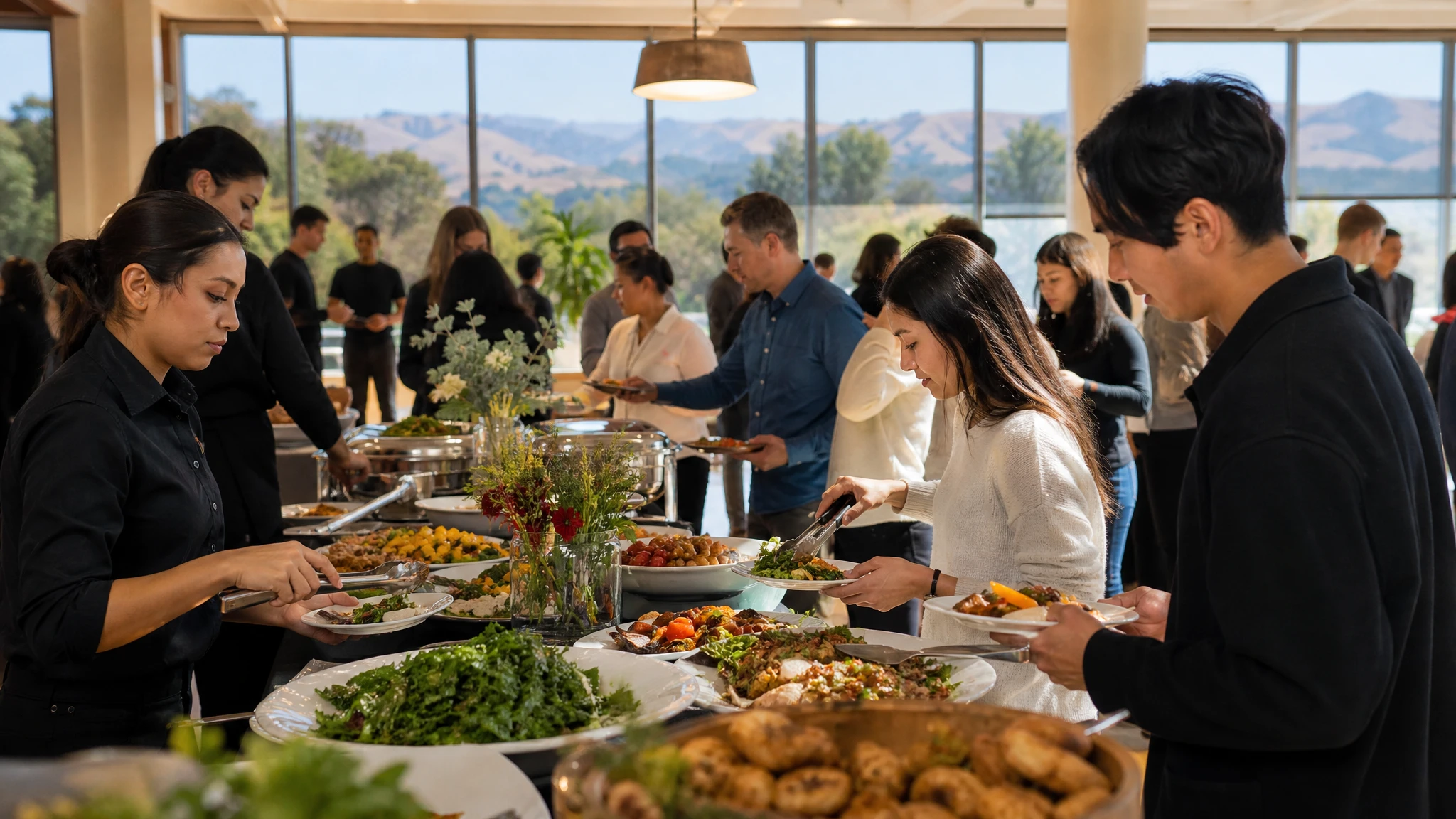
Dietary inclusion is now a recognized trend. The National Restaurant Association’s forecast lists allergen-friendly menus as trend number six, with restaurants expanding options for guests with dietary restrictions, from gluten-free to nut- and dairy-free dishes. At Caterman, we accommodate halal, vegetarian, vegan and common allergies, and we plan those dishes into the menu from the start instead of adding them at the end.
In practice, the most helpful thing a host can do is share needs early. Tell us how many guests need halal, vegetarian or vegan meals, and tell us about any allergies. We will talk through how we handle each one. No kitchen can promise zero risk, so we prefer a clear conversation over a general assurance. Planning this way also helps with waste, because we can prepare the right amounts of each dish. On the drinks side, the forecast names low-alcohol drinks among its headline items, and the National Restaurant Association also publishes a page on healthier, functional beverages. We have not relied on that page for details beyond its topic. For a bar at a private event, we provide bartenders and a full bar setup. We do not sell or supply alcohol. You supply it, and we serve it, so a lighter drink list is a matter of what you choose to buy and how we plan the service.
Why are local sourcing and less food waste part of the conversation?
Local sourcing and waste reduction come up because they connect to what guests value and to California rules for some food businesses and large events. SmartBrief’s summary of the National Restaurant Association report says restaurants plan to meet demand for emotional and financial comfort by reimagining classics, focusing on local sourcing and offering value-driven options. For us, a related practice is cooking from scratch. More than 80% of what we serve is prepared in our San Jose kitchen, and we plan quantities thoughtfully to reduce food waste.
The rules deserve a careful read. California’s SB 1383 includes food recovery requirements. According to SF Environment’s page on SB 1383, as of January 1, 2024, Tier 1 and Tier 2 edible food generators must donate the maximum amount of surplus edible food to food recovery programs, and San Francisco’s ordinance prohibits intentionally spoiling food. The City of Long Beach explains that the law sets a statewide goal to recover 20% of edible food waste by 2025. It says covered generators include food service providers and large events serving an average of 2,000 or more people per day, and that they can be inspected at any time. CalRecycle’s guidance for jurisdictions advises local governments to build their generator lists partly by contacting caterers and food trucks that serve large events. The City of Mission Viejo notes a general rule that large venues or event operators that do not provide food service, but allow food to be provided, must require on-site food facilities to comply. These are general descriptions, and we are not saying they apply to every event. Most private gatherings are far smaller than the large events described. If your venue is large, ask the venue and your local jurisdiction what applies.
What food safety and permit rules should hosts know about?
Food safety rules vary by city and county, so the first step is to ask the health department where your event will be held. The City and County of San Francisco publishes food handling rules for special events. Those are San Francisco’s rules, and we are not presenting them as Santa Clara County’s.
The San Francisco page says food at temporary food facilities must come from an approved source, such as a licensed wholesale or retail facility, and that food prepared or stored in a private home may not be used, served or given away. Potentially hazardous food must be held cold at or below 41°F or hot at or above 135°F, and a food thermometer must be provided. Ill food workers must stay home. At the end of each operating day, unserved food is destroyed in a health-department-approved manner or donated to a local food bank or other nonprofit, citing Article 7 of the California Retail Food Code. On permits, a county form from Imperial County, which is not in the Bay Area, says California Health and Safety Code section 114387 requires a Temporary Food Facility permit for anyone providing food at a public event, including existing restaurants. We cite it only for the statewide requirement. Whether your gathering counts as a public event, and what your county requires, depends on the details. We have not confirmed Santa Clara County’s permit specifics, so contact your county environmental health office before you finalize plans.
Planning Your Event
If you are weighing these catering trends for an event in San Jose, San Francisco or elsewhere in the Bay Area, we are glad to talk through what fits your guests and your venue. You can request a quote or look over the menu first.
Frequently Asked Questions
Are there Bay Area specific catering trend statistics?
We found none from a government, university or industry-association source. The best available evidence is national, from the National Restaurant Association’s 2026 forecast, which covers restaurants rather than catering. We use it as context and add practical notes from our own kitchen.
Can Caterman provide low-alcohol drinks for my event?
We provide bartenders and a full bar setup, but we do not sell or supply alcohol. You supply the alcohol, including any low-alcohol choices, and we serve it. We can help you plan the setup around the drinks you choose.
How do I ask for dietary accommodations?
Share your needs early in planning. We accommodate halal, vegetarian, vegan and common allergies, and it helps to know how many guests need each option and what the allergies are. We will talk through how we handle them.