
The short answer: A catering luncheon is a seated midday meal, usually plated or served family style, with a set start time, a service window and a planned end. For a corporate luncheon, build the plan around four things: the guest count, the room, the service style and the time food will wait before it reaches the table. Once those are settled, the menu, staffing and timeline follow.
Key Takeaways
- A seated luncheon runs on a schedule, so plan the timeline backward from the time the meal must end.
- Plated, family style and buffet service each suit a different room, agenda and guest mix.
- Hot and cold holding during the service window is a planning item, not an afterthought.
- Gather dietary needs and allergens early, and ask your caterer how it handles that information.
What Is a Catering Luncheon, and How Is It Different From a Buffet or Box Lunch?
A catering luncheon is a seated meal served at midday, often for a group that has a reason to be in the room together, such as a leadership meeting, a client appreciation event or an award presentation. Guests sit at tables and are served courses or shared dishes, rather than picking up a box and heading back to a desk. It has a pace, often a program, and a clear end time.
Corporate luncheon services usually cover more than the food. They can include menu planning, staffing, table setup, service, cleanup and coordination with your venue. At Caterman, we are a full-service catering and event planning company based in San Jose, and more than 80% of what we serve is prepared from scratch in our San Jose kitchen. You can read more about how we approach workplace events on our corporate events page. A seated luncheon tends to fit occasions like these:
- Board and leadership meetings that need a proper meal without leaving the building.
- Client and partner lunches where conversation is the point.
- Training days, workshops and offsite sessions.
- Recognition and award events.
- Retirement and milestone celebrations during the workday.
How Do You Plan a Corporate Luncheon?
Start with the date, a headcount range, the room and the time the meal must end. Then pick a service style, build a menu around it, collect dietary needs and confirm what your venue requires of outside caterers. Write a timeline that works backward from the end time, so the kitchen, the servers and your agenda all move together.
Here is a planning order that works for most corporate groups:
- Define the purpose. A working lunch with a presentation needs a different pace than a celebration.
- Set a headcount range and an RSVP date. A realistic number helps us plan thoughtfully and reduce food waste.
- Choose a service style: plated, family style or buffet.
- Collect dietary needs and allergens with your invitation, not on the day.
- Ask the venue about outside caterers, kitchen access, load-in routes, insurance requirements and rental equipment. Venue rules vary, so treat these as questions to ask, not assumptions.
- Build the timeline: arrival, seating, first service, program, last service, cleanup.
Cost depends on several factors rather than one number. The main ones are menu style, service style, headcount, staffing, rentals and venue logistics. A multi-course plated meal asks for more hands than shared platters, and a venue with a long load-in adds setup work. We walk through these factors with you so the plan matches your priorities.
Plated, Family Style or Buffet: Which Service Style Works for a Seated Luncheon?
Plated service gives the most formal feel and the most control over timing. Family style puts shared dishes on each table and encourages conversation. A buffet gives guests choice and moves quickly when the line is well designed. The right choice depends on your agenda, your room layout and how much time your guests have.
Plated service works well when you have a program, such as speeches or an awards segment, because everyone is served at nearly the same moment and the room settles quickly. It does need a clear plan for dietary meals so they reach the right seat. Family style suits groups who know each other and want a relaxed meal, though tables need enough space for platters. A buffet is flexible with larger or mixed groups, but you should plan the layout so lines do not block the room. If you are comparing dishes, our menu shows the kind of food we prepare.
Celebration touches can fit inside a luncheon too. If a milestone calls for a cake, we do not bake or supply it, but we provide cake service, which means cutting and plating the cake from your own baker. If you want a toast, we provide bartenders and a full bar setup, but we do not sell or supply alcohol. You supply it, and we serve it. For smaller gatherings that are not tied to a company, see our private events page.
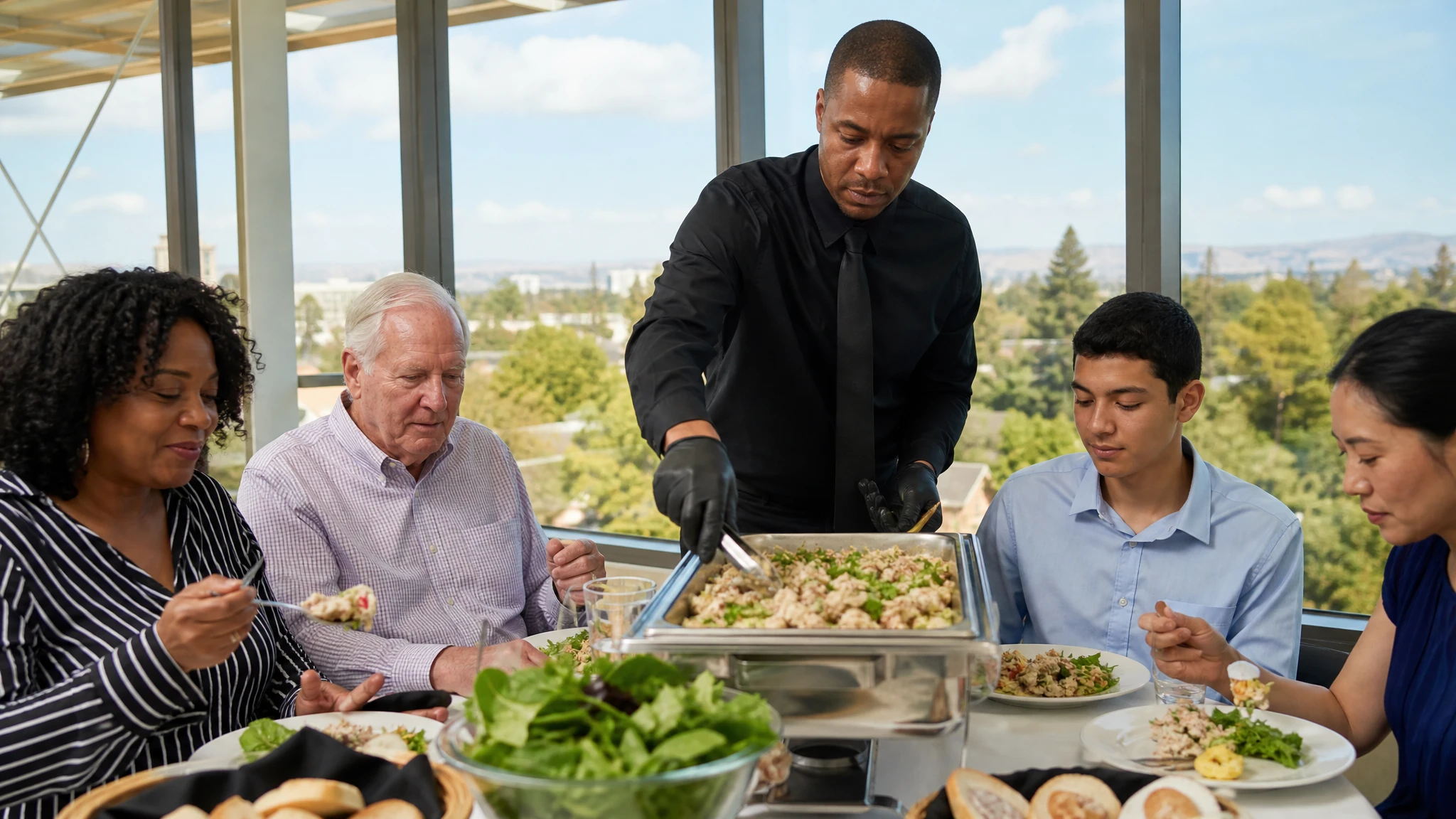
How Do You Handle Food Safety at a Catered Luncheon?
Keep hot food at or above 140°F and cold food at or below 40°F for the whole service window. According to the USDA Food Safety and Inspection Service danger zone guidance, bacteria grow most rapidly between 40°F and 140°F and can double in as little as 20 minutes. Food should not sit out of refrigeration for more than 2 hours, or 1 hour when the temperature is above 90°F.
A seated luncheon has a defined service window, so hot and cold holding belongs in your plan. USDA suggests chafing dishes, preheated steam tables, warming trays or slow cookers for hot food, and containers on ice for cold food. These are good questions to bring to any caterer:
- How will hot dishes be held at or above 140°F once they arrive?
- How will cold dishes stay at or below 40°F, and where will they be kept?
- How is plate-up timed so food does not wait long before it reaches the table?
- What changes if the event is outdoors on a warm Bay Area day?
It is also fair to ask whether your caterer operates under a valid county health permit. In Caterman’s home county, the Santa Clara County Department of Environmental Health catering permit page explains that a caterer already holding a valid Food Facility Environmental Health Permit, such as a restaurant, is approved to cater offsite. A caterer without one can apply for a Catering Permit, and Environmental Health Specialists review the packet. Separate rules apply to public events. The County’s temporary events food facility permit page and its temporary food events compliance page cover food sold or given away at public or special events, and the Town of Los Gatos permit FAQ says the organizer is responsible for applying. Those pages do not say whether a private luncheon needs one of those permits, so if your event is open to the public or the community, check with the county and your venue.
How Do You Plan for Dietary Needs and Allergens at a Luncheon?
Ask for dietary needs and allergens with the invitation or RSVP, share the full list with your caterer well before the event, and ask how the caterer handles allergen information on the day. At Caterman, we accommodate halal, vegetarian, vegan and common allergy needs, and we plan those meals as part of the menu rather than as an afterthought.
California has training expectations for food workers on this topic. The Santa Clara County Environmental Health fact sheet on major food allergens says the California Retail Food Code requires the person in charge and food employees to have training that covers major allergens, the foods identified as major allergens and the symptoms of an allergic reaction. It also says Food Handler Cards must be renewed every three years. A newer law, SB 68, adds sesame to the major food allergens listed in the California Retail Food Code. It also sets menu allergen notice duties for food facilities subject to federal menu-labeling rules, which means certain chain restaurants. Do not assume it applies to catering. Treat it as a reminder to ask your caterer how it communicates allergens.
A short guest form keeps this simple. Ask guests to share:
- Any food allergies, and how serious they are.
- Halal, vegetarian or vegan meal needs.
- Other dietary restrictions that affect what they can eat.
- A contact name if the guest wants to speak with the kitchen directly.
Planning Your Event
If you are planning a seated luncheon in San Jose, San Francisco or elsewhere in the Bay Area, we are glad to talk through the service style, timeline and menu with you. You can request a quote when you are ready, or browse the menu first to see what we prepare.
Frequently Asked Questions
How long can food sit out during a catered luncheon?
According to USDA guidance, food should not be left out of refrigeration for more than 2 hours, or 1 hour if the temperature is above 90°F. Hot food should be held at or above 140°F and cold food at or below 40°F. Ask your caterer how it holds food during the service window.
Can you serve a cake or a toast at a corporate luncheon?
Yes, with some limits. We do not bake or supply the cake, but we provide cake service, cutting and plating the cake from your own baker. We provide bartenders and full bar setup for a toast, but we do not sell or supply alcohol. You supply it and we serve it.
Do you accommodate dietary needs at a seated luncheon?
Yes. We accommodate halal, vegetarian, vegan and common allergy needs. Share your guests’ dietary information early, and we will plan those meals into the menu and talk with you about how allergen information is handled at the event.