
The short answer: Good holiday office lunch ideas start with a clear service format, a menu that works for every guest and a plan to keep food at safe temperatures. For a catered December lunch, choose between a buffet, food stations, plated service or individual boxed meals, then match the menu to your team, your space and your schedule. Caterman plans and serves office lunches across San Jose, San Francisco and the wider Bay Area.
Key Takeaways
- Pick the service format first. Buffets, stations, plated meals and boxed meals each suit different spaces and schedules.
- Plan for every guest by asking about dietary needs and allergies on the RSVP and by labeling every dish.
- Hold hot food at 140 degrees Fahrenheit or above and cold food at 40 degrees or below, and do not leave perishable food out for more than two hours.
- Ask any caterer for proof of a current Environmental Health permit before you sign.
What Are Some Good Holiday Office Lunch Ideas?
Good holiday office lunch ideas share a few traits: a warm main dish people recognize, side dishes that can stand on their own, a dessert that is easy to serve, and real choices for guests with dietary needs. Seasonal themes such as a roast dinner lunch, a comfort-food spread or a global flavors table all work well in a December office.
- Classic roast lunch. Roasted turkey or chicken with gravy, herb stuffing, roasted root vegetables, green beans and warm rolls. It feels like the season, and most guests know what to expect.
- Comfort-food spread. Baked pasta, braised meats or beans, mashed potatoes and a crisp green salad. Dishes like these hold well on a buffet line and suit a relaxed lunch hour.
- Global flavors table. Rice dishes, curries, grilled meats and vegetables, flatbreads and chutneys. This format makes it simple to offer halal, vegetarian and vegan dishes side by side.
- Soup and sandwich lunch. Seasonal soups, sandwich and wrap platters and a hearty salad. It works when your team has a short break and wants something easy to eat.
- Winter salad bar. Greens, roasted squash, citrus, grains, beans and a choice of proteins, with toppings and dressings served separately. Nuts and seeds should be labeled clearly.
- Dessert and coffee table. Cookies, small pastries, fruit and hot drinks that people can enjoy at their own pace after the meal.
These are editorial ideas drawn from our kitchen experience, not survey results, so treat them as starting points and adjust them to your team. A lunch should leave people ready to return to their afternoon, so many teams choose one main dish, a few sides and a lighter dessert over a heavy multi-course meal. If your office wants a celebratory toast, we provide bartenders and a full bar setup, and you supply the alcohol that we serve. If you want a cake, your own baker supplies it and we handle the cake service, which means cutting and plating. Check your company’s policy on alcohol at work events before you plan the bar.
Which Catering Formats Work for an Office Holiday Luncheon?
The right format depends on your headcount, your space and how long people can step away from work. Buffets and stations suit a social lunch where people mingle. Plated service suits a seated program with remarks or awards. Boxed individual meals suit teams spread across floors or teams that want a quick, low-mess lunch. Each of these office holiday luncheon ideas fits a December schedule.
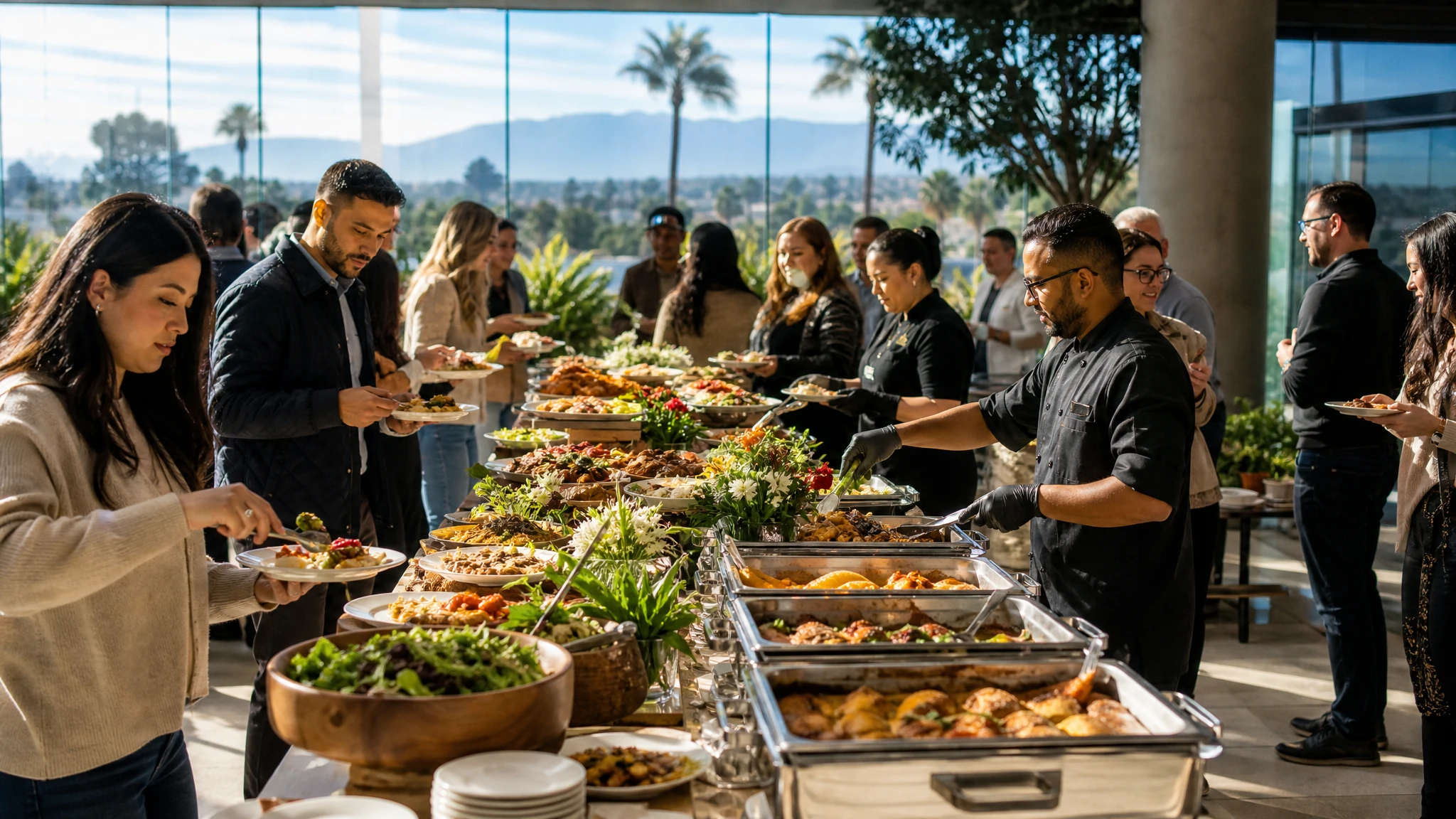
- Buffet. Guests serve themselves from a line. It is flexible for mixed dietary needs and lets people choose their own portions. Plan the line so it keeps moving, with serving utensils and a label at every dish.
- Food stations. Separate stations, such as a grain bowl station and a dessert station, spread guests across the room and shorten lines. They need more floor space and more staff.
- Family-style platters. Platters are placed on each table and passed around. This encourages conversation and works well for team lunches at shared tables.
- Plated lunch. Servers bring each course to seated guests. It gives a more formal feel for a leadership lunch or an award presentation. It calls for seating plans, careful timing and entree choices collected ahead of time.
- Boxed or individually packed meals. Each person receives a labeled meal. This suits hybrid offices, meeting rooms and teams that eat at their desks, and it makes dietary labeling straightforward.
Space matters as much as the menu. Ask building management about loading access, elevator use and any rules for catering vendors, which are common questions in office buildings in downtown San Jose and San Francisco. Decide where the food, drinks and dessert will sit so that traffic does not block hallways or doorways. If your team cannot all eat at the same time, tell your caterer so the service can be planned around staggered arrivals and food stays at the right temperature, which we cover below. You can read more about how we support workplace gatherings on our corporate events page.
How Do You Plan a Holiday Lunch Menu for Every Guest?
Ask every guest about dietary needs and allergies on the RSVP, then build a menu that gives each person a full plate, not just a side dish. Plan vegetarian, vegan and halal choices as real main dishes, and ask your caterer to label every dish. We accommodate halal, vegetarian, vegan and common allergy needs, and we prepare more than 80% of what we serve from scratch in our San Jose kitchen.
- Ask on the invitation. Add one short question: are there any allergies or dietary needs we should plan for? Invite specifics, such as vegan, halal or a named allergen.
- Offer real main dishes. A vegetarian or vegan entree that stands on its own is more welcoming than a plate of leftover sides.
- Label every dish. A card with the dish name and its main ingredients lets guests choose without having to ask.
- Keep serving utensils separate. One utensil per dish keeps ingredients from traveling from one tray to another.
- Create a way to talk. Guests with serious allergies should be able to speak with the caterer before the event, not at the buffet line.
The U.S. Food and Drug Administration defines nine major food allergens: milk, eggs, fish, crustacean shellfish, tree nuts, peanuts, wheat, soybeans and sesame. The FDA says sesame became the ninth in 2021 when the FASTER Act was signed, and the agency lists all nine on its food allergies page. The USDA Food Safety and Inspection Service lists the same nine in its guide to the Big 9 allergens and notes that a reaction can occur within minutes or hours, with symptoms that range from mild to life-threatening. That is why early questions and clear labels matter. No shared buffet can remove all risk, so guests with serious allergies should confirm details with the caterer. An accurate RSVP count also helps us plan quantities carefully, which supports our effort to reduce food waste.
How Do You Keep Holiday Lunch Food Safe at the Office?
Keep cold food at 40 degrees Fahrenheit or below and hot food at 140 degrees Fahrenheit or above, and do not leave perishable food out between those temperatures for more than two hours. The USDA calls that middle range the Danger Zone, where bacteria multiply. The two-hour limit comes from USDA food safety guidance written for a game day party, but it states a general rule.
- Hot dishes. The USDA names chafing dishes, warming trays and slow cookers as ways to keep hot buffet food at 140 degrees or above. West Virginia University Extension buffet safety guidance gives the same advice for hot and cold food.
- Cold dishes. Keep cold items chilled until they are served, and put out smaller amounts at a time when you can.
- The two-hour clock. Note when serving begins. Utah State University Extension holiday buffet guidance also says food should not sit at room temperature for more than two hours.
- Staggered lunches. If people come and go, ask the caterer to hold back portions and replenish rather than leave everything out for the whole afternoon.
- After the lunch. Plan for what happens when the event ends. Food that has been out past the two-hour mark should not be saved for later.
If your lunch is delivered rather than cooked on site, the same temperatures apply along the way. USDA guidance on safe handling of take-out foods says hot food should be kept at 140 degrees or above and cold food at 40 degrees or below, and that bacteria grow rapidly between those temperatures. Ask your caterer how food is transported, held and kept at temperature once it arrives. Make sure someone at your office can meet the delivery, show where to set up and keep the serving area clear. This is practical guidance, not a guarantee, and your caterer’s own food safety practices matter as much as your setup.
How Do You Choose a Caterer for a Corporate Holiday Lunch?
Start by asking for proof of a current Environmental Health permit, then compare menu fit, dietary handling and service. Santa Clara County’s Department of Environmental Health says caterers must hold a valid permit under the California Retail Food Code, and a restaurant with a valid food facility permit is approved to cater offsite, per its catering permit page. Other Bay Area counties have their own health departments, so ask which permit applies.
- Permit. Can you show a current Environmental Health permit?
- Dietary needs. How do you handle halal, vegetarian, vegan and allergy requests, and will every dish be labeled?
- Preparation. How much of the menu is made from scratch? At Caterman, more than 80% of what we serve is prepared from scratch in our San Jose kitchen.
- Service. What is included: setup, serving staff, breakdown and cleanup, and any rentals?
- Temperature control. How will food be transported, held and served at the right temperature?
- Extras. If you want a toast or dessert, can the caterer provide bartenders, a bar setup or cake service? Remember that we do not supply alcohol or cake, so you provide both and we serve them.
The county’s page on temporary food events and permits says that selling food or beverages without a valid Environmental Health permit results in immediate closure of the food facility. It may also bring a misdemeanor citation, fines and denial of future health permits. That is a good reason to ask early instead of assuming. When you compare quotes, compare the same things. Cost depends on headcount, menu complexity, service style, staffing, delivery and setup, and rentals, so a simple buffet and a plated lunch with several choices will not be priced alike. Give every caterer the same details so the quotes line up. Holiday dates are popular, so ask about availability as early as you can.
Planning Your Event
If you are planning a December lunch for your team in San Jose, San Francisco or elsewhere in the Bay Area, you can request a quote and tell us your date, headcount and dietary needs. You can also browse the menu for ideas.
Frequently Asked Questions
How far ahead should we plan a catered December office lunch?
Start as soon as you have a date and a rough headcount, since holiday dates are popular and a caterer needs time to plan the menu, staffing and setup. Confirm your final headcount and dietary needs after RSVPs close. Accurate numbers help us plan quantities carefully and reduce food waste. Tell us early if your building has loading, elevator or vendor rules.
Can one lunch cover halal, vegetarian, vegan and allergy needs?
Yes. We accommodate halal, vegetarian, vegan and common allergy needs, and we can plan these into one menu when we know about them ahead of time. Collect dietary needs on your RSVP, ask for every dish to be labeled, and have guests with serious allergies speak with us before the event. No shared buffet can remove all risk, so that conversation matters.
Can Caterman supply the cake and the alcohol for our holiday lunch?
We do not bake or supply cake, and we do not sell or supply alcohol. For cake, your own baker provides it and we handle the cake service, which means cutting and plating. For drinks, we provide bartenders and a full bar setup, and you supply the alcohol, which we then serve.