
The short answer: Sustainable protein sourcing in catering comes down to asking your caterer where each protein comes from, how it was raised or caught, and whether the supplier is a legal, approved source. For seafood, a practical standard is the Monterey Bay Aquarium Seafood Watch rating system. For every protein, California’s retail food code requires an approved source, so a protein has to pass that test before it can pass any sustainability test.
Key Takeaways
- Decide your protein priorities first, then ask your caterer to build the menu around them.
- For seafood, name the standard you want to follow, such as Seafood Watch ratings, and check the live ratings before you finalize a dish.
- A local or small-scale supplier is only usable if it is an approved source under California’s retail food code.
- Accurate headcounts, dietary planning and portion planning matter as much as the protein you pick, because food that is eaten is food that was worth sourcing.
What Does Sustainable Protein Sourcing Mean for a Catered Event?
For a catered event, sustainable protein sourcing means choosing meat, poultry, seafood, eggs, dairy and plant proteins with attention to how they were produced, how they reached the kitchen, and how much of them is eaten rather than thrown away. It is a set of questions and choices, not a single label. You set the priorities, and your caterer carries them through the menu and the kitchen.
This guide sticks to what can be sourced. It covers two areas where clear standards exist: seafood buying guidance and California’s rules about where food may come from. It does not rank beef, chicken, pork, fish or plant proteins against each other, because comparisons like that need numbers we are not going to guess at. Instead, it gives you a way to ask better questions and judge the answers. At Caterman, we have been catering across the San Francisco Bay Area from our San Jose kitchen since 1997, and more than 80% of what we serve is prepared from scratch. That matters here because cooking from scratch means the quality and origin of ingredients are part of our daily work, not a side topic. Sustainability is also not one decision. You will make several: which proteins appear, how much of each you need, and how leftovers and surplus are handled.
How Do You Choose Sustainable Seafood for Catering?
Start with the Monterey Bay Aquarium Seafood Watch ratings. Practice Greenhealth’s seafood purchasing guide recommends buying seafood from Seafood Watch’s Good Alternatives list, and preferably its Best Choices list. It also recommends working with vendors to stop buying any wild-caught or farmed seafood that Seafood Watch lists as Avoid. Ask your caterer which rating each species and source carries.
Seafood sourcing has more than one standard, so it helps to name the one you mean. Practice Greenhealth’s guide to sustainable seafood purchasing explains that its own purchasing standards consider aquaculture sustainable only for mollusks and seaweed or kelp. The same guide notes that Seafood Watch, which it describes as the leading third-party certifier, does qualify some varieties of farmed finfish as sustainable. The two standards draw the line in different places. Pick one, tell your caterer which, and ask for answers in those terms. The guide also recommends working with vendors and suppliers to source underutilized wild species from local or small-scale community-based fisheries, which can widen your options beyond the few species everyone expects on a menu. It is candid about a limit too: Seafood Watch’s assessment does not account for impacts on the small-scale, independent fishing industry. For species-specific information, the guide points to Seafood Watch’s Seafood Recommendations, and for food-system worker health it points to the Seafood Social Risk Tool. We do not quote individual ratings here, so please check the live Seafood Watch site before you commit to a dish for your Bay Area event.
Why Does a Sustainable Protein Have to Come From an Approved Source?
An approved source is a food source that California’s retail food code allows. Section 113735 of the California Retail Food Code defines it as a food source allowed under the code’s provisions. In practice, a local or sustainable protein is usable at your event only if its supplier fits within those rules. A farm or fishery you admire still has to be vetted through licensed channels.
Chapter 11 of the California Retail Food Code, which covers temporary food facilities, adds that food at a temporary food facility must come from an approved source and that home-canned or home-processed foods are not permitted. That chapter speaks to temporary facilities, so do not stretch it to every catered event. It does show the direction of the rules: where food comes from matters as much as how it is cooked. This is worth remembering when you are tempted by a farm that sells straight to hosts, a neighbor who raises chickens, or a friend who smokes fish. The intent is good, but the product may not be allowed on a caterer’s menu. The specifics depend on the supplier and the situation, and we have not covered Santa Clara County permit rules here. Confirm the details with Santa Clara County Environmental Health, and make sure you are reading the current edition of the code. The 2024 edition linked above took effect on January 1, 2024.
How Do You Plan a Menu Around Sustainable Proteins?
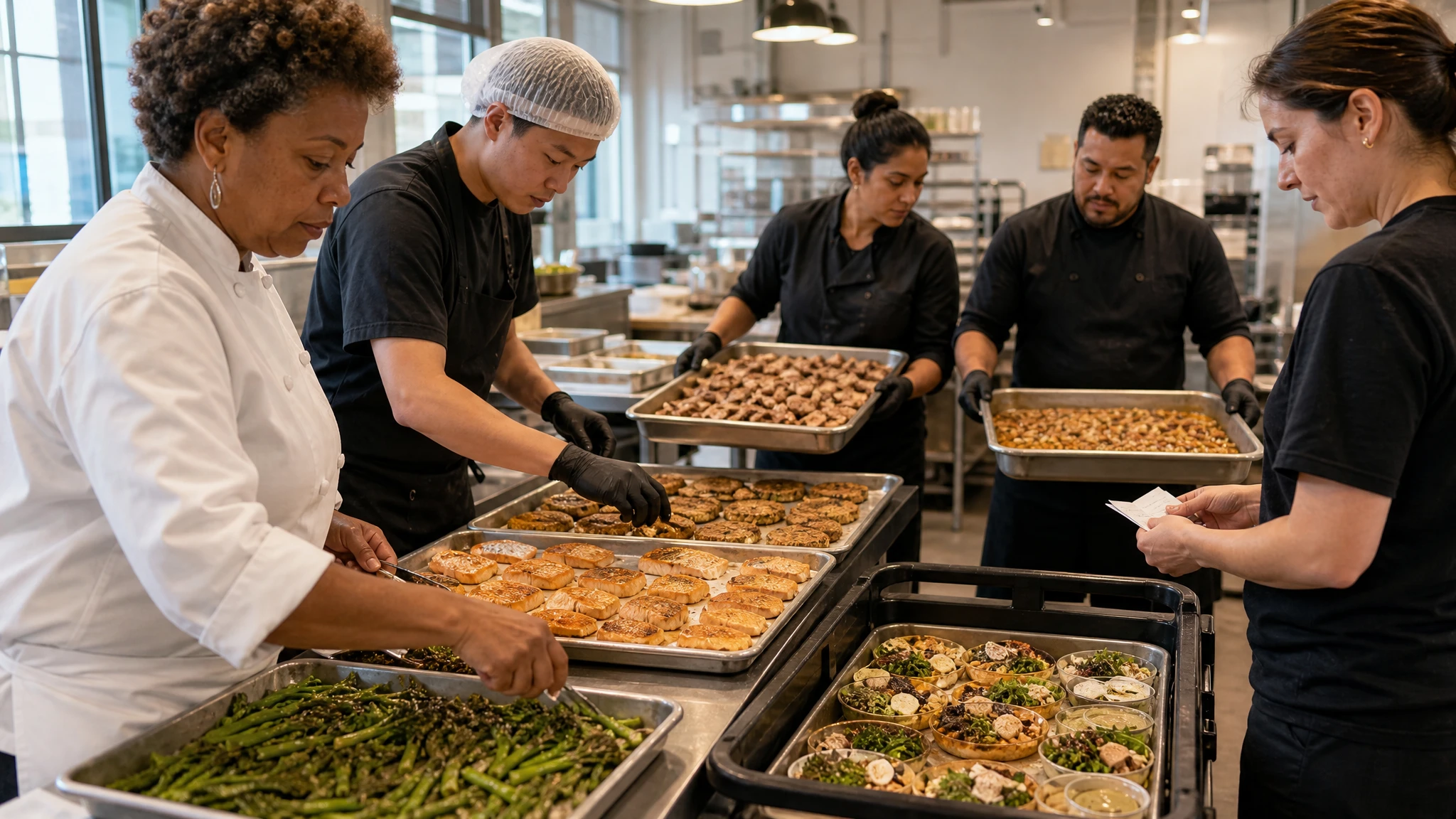
Pick your protein priorities first, then build the menu around them. Tell your caterer what matters most, such as seafood ratings, local sourcing, or a smaller share of meat on the plate, and let the menu follow. Then plan quantities carefully, because the most sustainable protein is the one that actually gets eaten. Good planning reduces waste and leaves room for every guest’s dietary needs.
Planning is where a caterer can help most. More than 80% of what we serve is prepared from scratch in our San Jose kitchen, and we plan thoughtfully to reduce food waste. That starts with an accurate headcount and an honest picture of who is eating what. We accommodate dietary needs including halal, vegetarian, vegan and common allergies, so tell us early. When a guest list includes several diets, a well-built menu offers protein choices that work across the table instead of a separate plate for every preference. A vegetarian or vegan dish can also be a sensible backup if a particular species or cut is not available when you need it. The right protein plan depends on the event. A wedding with a seated dinner calls for different decisions than a corporate lunch where guests come and go. Our menu is a good place to see which dishes could carry the protein you care about.
What Questions Should You Ask Your Caterer About Proteins?
Ask where each protein comes from, who supplies it, which rating or standard applies, whether the supplier is an approved source, and how quantities are planned to limit waste. Clear answers to those five questions tell you most of what you need to know. If an answer is vague, ask again, or consider a different dish for the same slot on the menu.
- Where does it come from? For seafood, ask for the species and how it was caught or farmed, so you can compare it with the Seafood Watch listing.
- Who supplies it? A named supplier is easier to check than a general description.
- Which standard applies? For seafood, ask whether the dish meets Seafood Watch’s Best Choices or Good Alternatives lists, and say whether you want the stricter Practice Greenhealth view of farmed seafood.
- Is the supplier an approved source? This is the legal test under the California Retail Food Code, and it applies to small and direct suppliers as well as large ones.
- How are quantities planned? Ask how the headcount, dietary mix and serving style shape how much of each protein is prepared.
You may also wonder how these choices affect the budget. We do not quote figures in this guide, and none of the sources behind it offer any. In general, cost depends on factors such as the species and rating tier you choose, the type of supplier, and the sourcing channel. The helpful move is to share your priorities before the menu is set, so sourcing decisions and budget are weighed together instead of one quietly overruling the other.
Planning Your Event
If you are planning an event in San Jose, San Francisco or elsewhere in the Bay Area, tell us which protein priorities matter most when you request a quote, and browse the menu to see how we cook.
Frequently Asked Questions
What is the easiest way to start with sustainable proteins at an event?
Choose one or two priorities and share them with your caterer early. For many hosts, seafood is the clearest place to begin, because Seafood Watch ratings give you a concrete standard to ask about. Then ask each of your proteins the same plain questions about origin, supplier and approved source status.
Can a caterer use proteins bought directly from a local farm?
It depends on whether the supplier is an approved source under the California Retail Food Code. Section 113735 defines an approved source as a food source allowed under the code’s provisions. Confirm the specifics for your situation with Santa Clara County Environmental Health or the environmental health office in your county.
Does Seafood Watch cover every sustainability question about seafood?
No. Practice Greenhealth’s guide notes that Seafood Watch’s assessment does not account for impacts on the small-scale, independent fishing industry. It also points to the Seafood Social Risk Tool for food-system worker health. Use the ratings as a strong starting point, and check the live Seafood Watch site for current information.